The Importance of Tiny Details
So often, we get lost in our everyday shuffle, barreling through the day, sprinting from meeting to meeting, doing our best to feel like productive human beings by sundown. In the middle of all of life’s noise, we need spaces that ground us. Restaurants, bars, bakeries, and cafés all offer us rare little pockets where time slows down just enough to notice things we might not have otherwise. The way a space can pull you in, or the way a small gesture can disarm you. Or how a detail you barely register still shapes how you remember it later. Hospitality isn’t built on grand gestures. It’s built on tiny ones. When done right, those tiny details aren’t tiny at all.

First Impressions Matter and the Guest Experience in Restaurants
When you step into a restaurant, your opinion begins to form within seconds, long before you ever consciously decide what you think.
What does the door feel like in your palm? Does it open smoothly or jerk? Is the entryway clean? Does the host look up right when you walk in? Do they smile? Do they welcome you in? Is there a place to put your coat, or are you suddenly clutching it on your lap for the next two hours? What are the colors of the walls? The scent of the room? Is the music setting the tone, or fighting it? Is it too loud? Barely there? Is the style of music suitable for the space?
More importantly, how do you feel upon entering? Relaxed? Excited? Overstimulated?
Those emotional cues are quiet indicators of whether a brand’s details are working together or against each other.
Fast-forward: you're shown to your table. You sit. You settle in.
What does the chair feel like? Does it support you, or is it too low or too deep? Is the table wobbly? Is it set with intention? Are the linens folded or rolled nicely? Are the glasses spotless? Is the candle on your table lit?
You’re handed a menu.
What does it feel like? Is it thick and textured or thin and flimsy? Is it legible? Has someone taken time with the wording and spacing, or is it just a jumbled list?
Menus are like invitations. How they’re designed and cared for can support the restaurant’s vision. They should complement the craft of the dishes themselves.
Your server approaches.
What is their body language? Open? Closed off? Do they seem happy to be there? Do they make eye contact? Do they anticipate your needs or wait until you ask? Do they move with confidence or stress? Does water arrive before you wonder where it is? Does someone remember you from last time, even if all they recall is your favorite cocktail?
Hospitality is choreography. When it’s done well, you almost never see it. When it’s done poorly, you feel it immediately. The tiniest movements, unspoken cues and unmissed details tell you exactly how much a restaurant cares about the full guest experience.
The Moment You Leave
And finally, those last ten seconds.
Are you thanked as you walk out? Is there a final gesture? A mint, a matchbook, a goodbye, a “hope to see you again soon”? Or do you slip out unnoticed, blending into the night without a single closing touchpoint?
The exit is equally important as the entrance, cementing your last impression.
Why Details Matter in Food and Beverage Branding
Brands that exist in the food and beverage space have a unique opportunity to live alongside consumers and activate sensory experiences that are deeply personal. Taste, sight, sound, scent, texture …. hospitality touches all five constantly. Few industries have that kind of immediate reach. When good design is woven thoughtfully into those moments, it deepens the experience in ways that make people think of you first.
The art of tiny details is anything but tiny. It’s the difference between a restaurant you forget and a restaurant you recommend. It’s why certain spaces become rituals and others fade into the background. It’s why people drive 45 minutes for a cocktail they could theoretically get anywhere because the experience of having it there feels different.
Tiny details build trust. They signal consistency. They communicate care without bragging about it.
Most guests will never be able to articulate these details individually, they just know they felt right in your space.
In food and beverage branding, design lives far beyond logos or menus. It shows up in the smallest moments of a guest experience, from how a space feels when you enter to what lingers once you’ve left. The following examples highlight how thoughtful hospitality design transforms tiny details into lasting impressions.
Food and Beverage Brands That Get The Details Right
There are so many places that do this well. You walk in and just feel good about it. You probably don't even realize how every detail has been obsessed over. Someone thought through the whole arc of your experience long before you arrived.
My partner and I love taking day trips to explore new places and we tend to come home with tiny things that make each stop memorable. Stickers, matchbooks, menus, coasters… all small artifacts that quietly hold the feeling of a place long after you’ve left it.
From packaging to menus to the atmosphere itself, there are thousands of opportunities for thoughtful details. Design becomes the quiet architecture of those details, holding the entire experience together.
Stissing House
Pine Plains, NY
Tiny Details we Love:
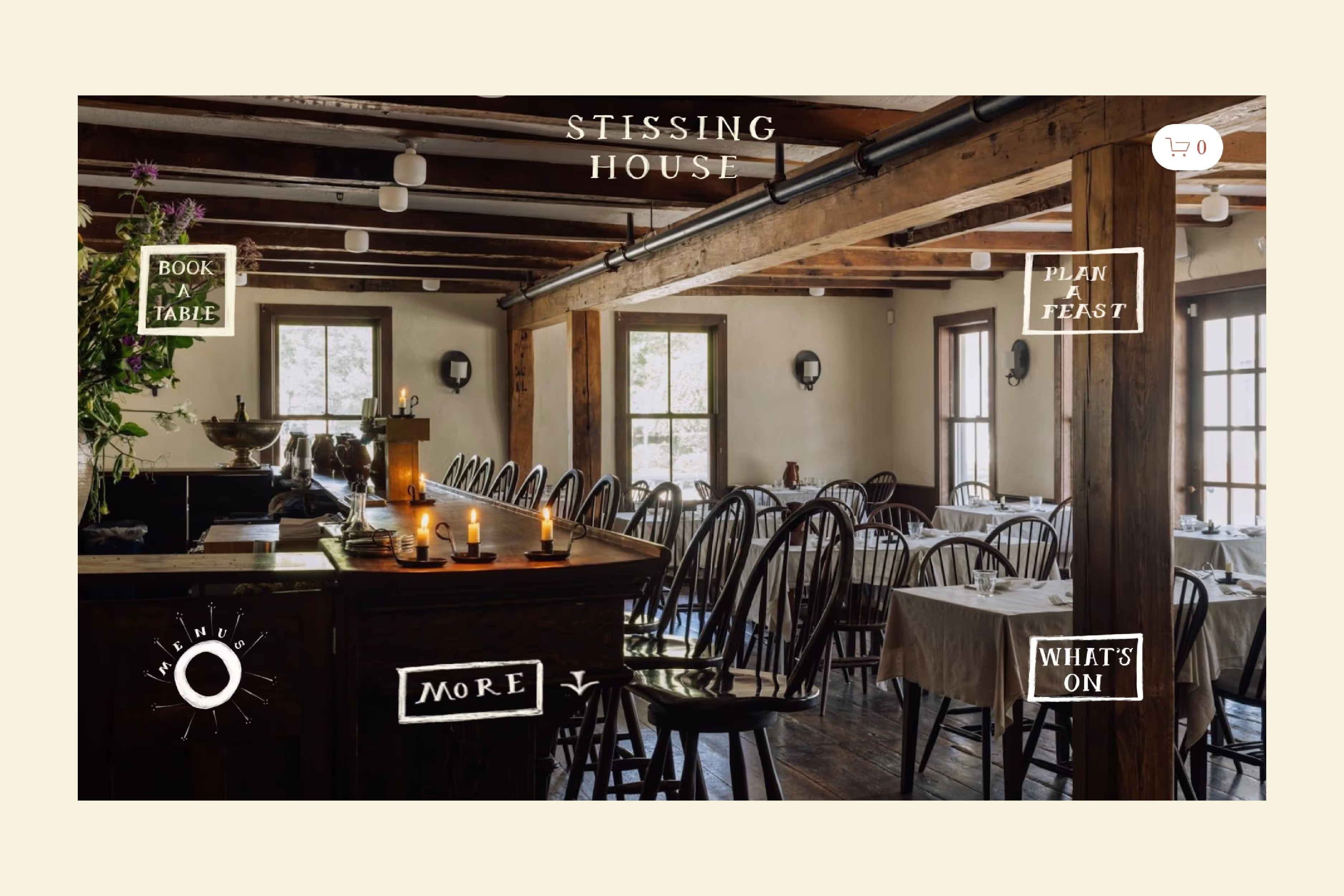
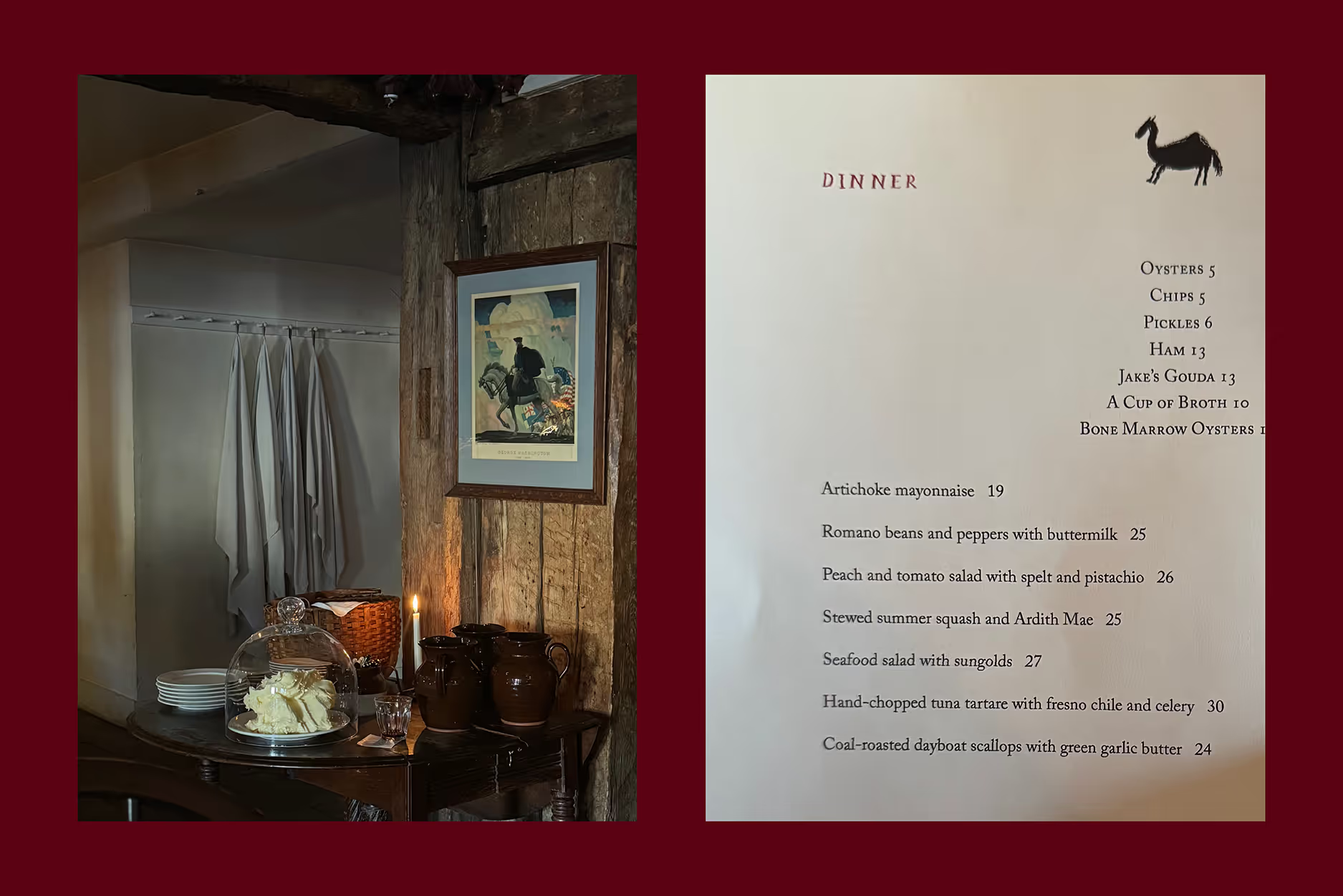
Everything about Stissing House feels considered. As one of the oldest taverns in the country, the reimagined space carries its history with intention. The menus are printed in old-style type on cream paper accompanied by a hand-done wordmark, and the glow of the candlelight makes them feel almost archival, like something that’s lived in this building for centuries.
Exposed beams, Windsor chairs, and small pieces of 1700s-era ephemera echo that sense of time, grounding the space in a way that feels warm and quietly grand. Fresh table linens hang on old wooden hooks complimenting the decor without even trying. A tiny gesture that somehow made the whole place feel both lived-in and lovingly cared for.
Bread service was equally special. On a separate antique table sat a towering mound of house-made butter under a large glass cloche, the pile dwindling with every guest served.
The service matched the room. It was unhurried and genuinely welcoming, almost like being invited into someone’s home. And the food followed suit: honest, beautifully cooked and described on the menu with a clarity that didn’t oversell or overpromise.
Brunette Wine Bar
Kingston, NY
Tiny Details we Love:
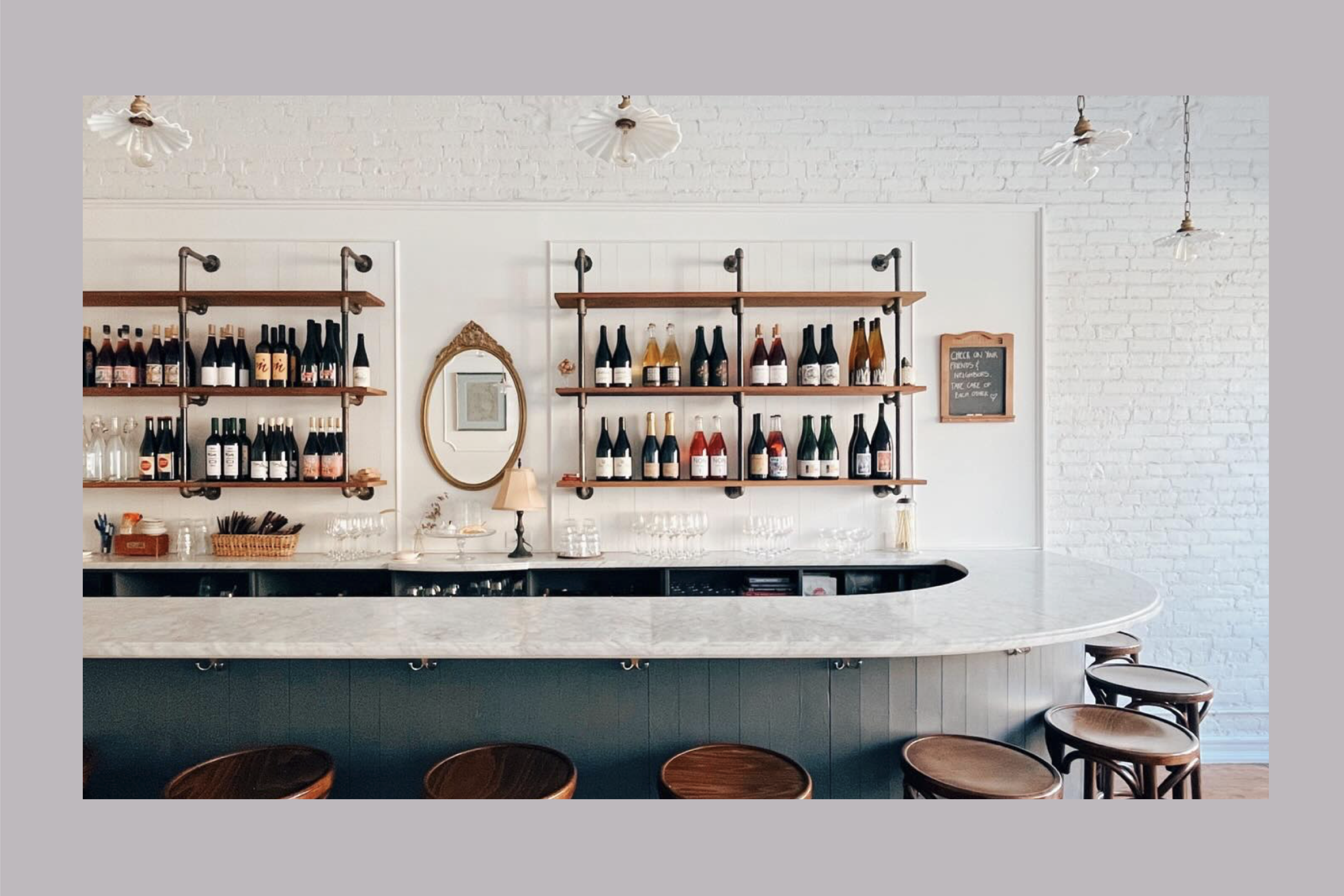
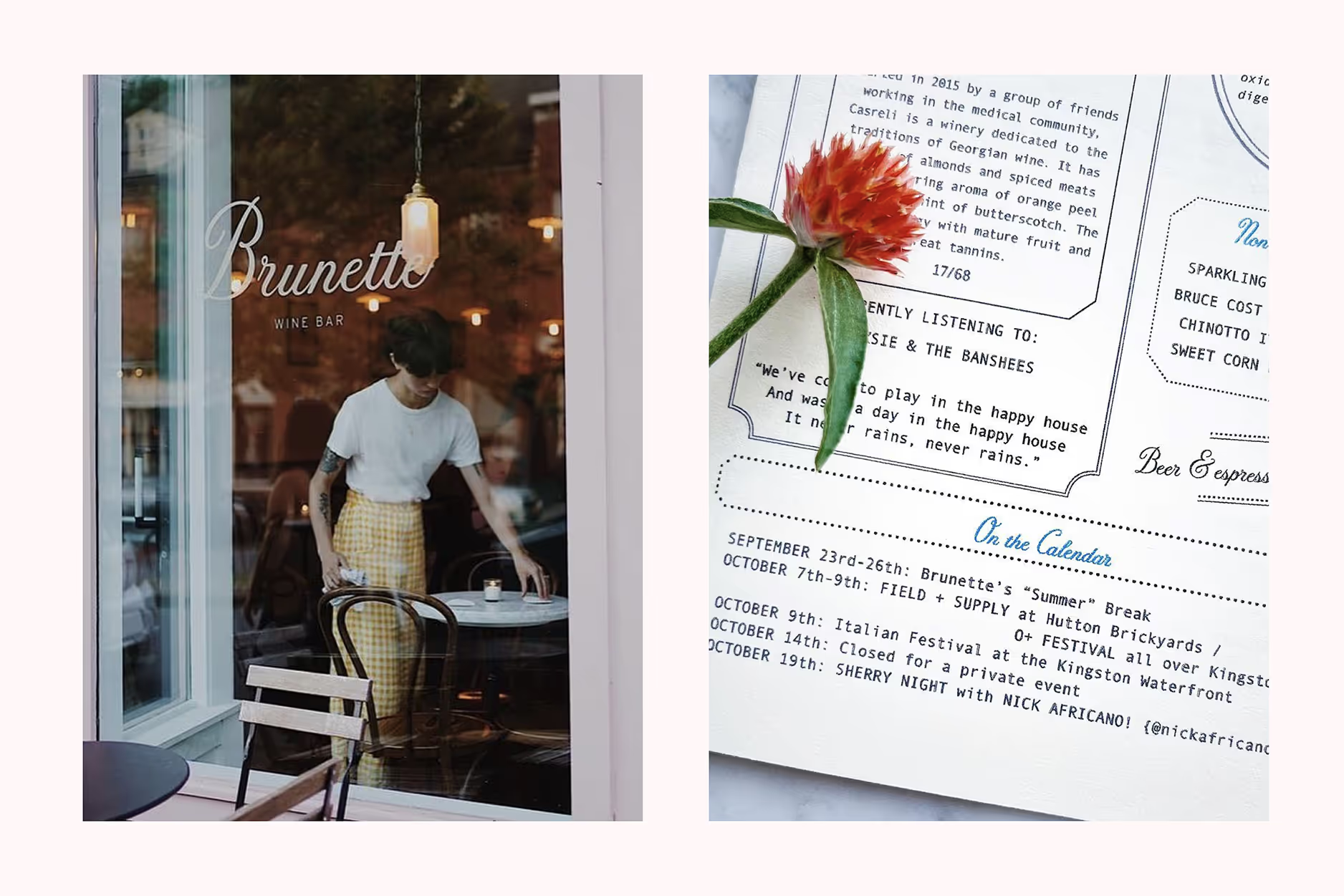
Brunette is a neighborhood wine bar that immediately charms you. The tiny room (just a small bar and a few tables) feels like being dropped into your effortlessly-cool friend’s kitchen. Service is friendly and intuitive; it’s the kind of place where they ask “what’s next?”, a signal that you’re welcome to settle in and stay as you please.
The menus are perfectly sized to hold, adorned with their blue script wordmark paired with a clean, understated monospace font that adds structure and gives a hint of modernity. The coasters are soft to the touch, embossed with their logo and finished with a delicate scalloped edge that felt elegant and intentional. Flip through the little menu and you’ll find a tight, charming selection of composed snacks and tinned fish.
The playlist floated through the space at the perfect volume. It was warm and present without overpowering, featuring a mix that felt current but not overly energetic. It all added up to that “around the kitchen counter with friends” feeling where you can lose track of time.
・・・・・
Tiny details are everywhere design and food intersect. Beyond restaurants, food and beverage brands have an amazing opportunity to express themselves uniquely.
At home, we have a growing basket of coffee bags that Jon has collected, each serving as their own little study in brand personality. Coffee bags and packaging can carry just as much intention as the beans themselves. This is a great example of how design can amplify a brand's voice and vision while also complementing the product's quality.
Brandywine Coffee Roasters
Tiny Details we Love:
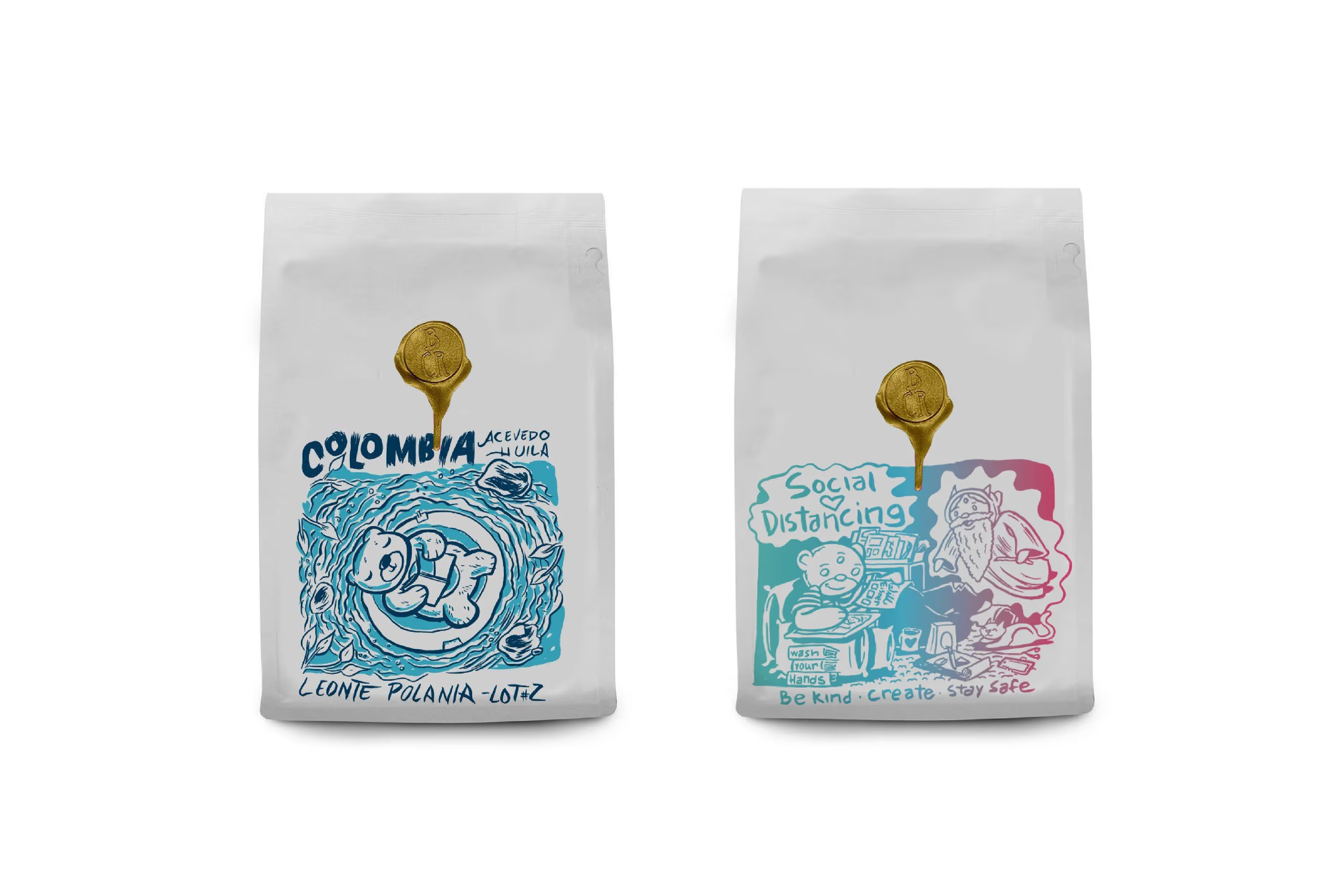
Brandywine makes responsibly sourced coffee rooted in experimental practices and blends that leave your palate curious in the best way. Their willingness to play with unexpected processing methods is part of their magic, which extends well beyond the beans. Every bag is individually screenprinted in-house, featuring artwork by Todd Purse, whose illustrations give each roast its own personality while still feeling unmistakably Brandywine.
Their signature wax seal finishes each bag like a small, intentional gift. The result is packaging that feels as handcrafted and imaginative as their roasts. Each composition is unique to the coffee inside, making the unboxing experience part of the ritual. The bag art becomes just as anticipated as the first sip.

Luminous Coffee
Tiny Details we Love:
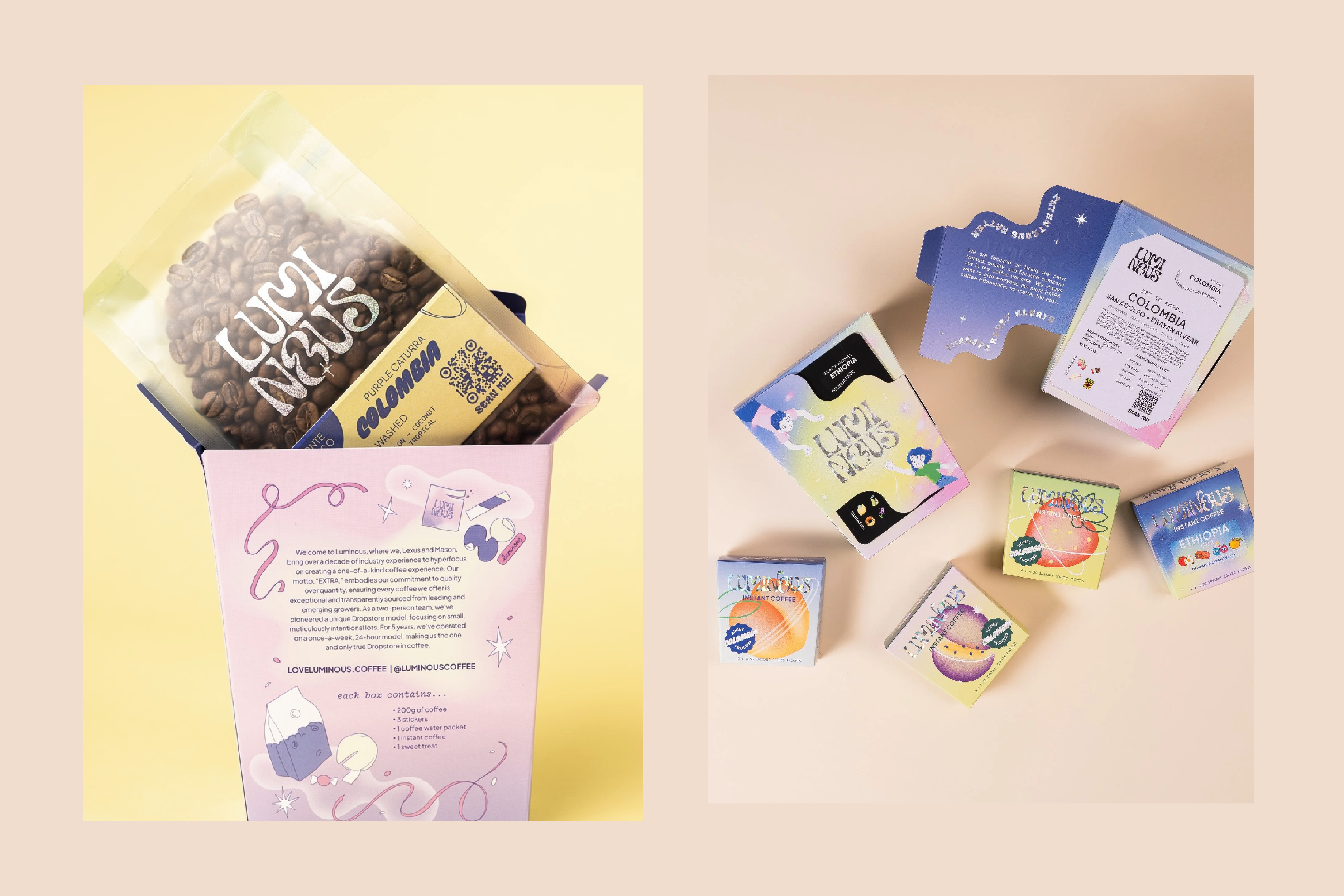
Unboxing Luminous feels like opening a curated little world. Their packaging is intentionally layered with hidden messages, experimental print pieces and tiny surprises tucked throughout. Clear bags reveal the beans inside, topped with a holographic wordmark that catches the light just right. Foils, unexpected finishes and bold color choices turn every fold into a mini discovery.
They even call these “take-out boxes,” underscoring how much they value the experience from the moment you pick it up. Each one includes a neatly packaged instant coffee packet which plays as a small offering just because. It’s clear they think about their consumer at every step, providing a sense of discovery and excitement, a lovely example of how tiny details can transform a moment into a memory.
・・・・・
Brands aren’t just built on one big idea. They are built through hundreds of tiny moments and details that add up.
These decisions have huge ability to transform and contribute to every part of an experience. Without them, we wouldn’t have spaces that feel as memorable. Tiny details are what make a place feel cared for and in turn, make us feel cared for too.