Brand Identity vs. Logo: What’s the Difference (and Why does it Matter)?
While a well-designed logo helps people recognize you, true brand recall comes from the broader system that surrounds it: your beliefs, personality, voice, and the many supporting visual elements that help to tell your story. In this article, we’ll go beyond the logo, exploring what actually makes a brand memorable.
Sure, your logo is important. But it’s not the whole story.
Don’t get me wrong. A logo is an incredibly valuable asset for your business. It’s the face of your brand: The thing everyone sees first. There should be time, and oftentimes money, invested in the face of your brand, as when done right, it can be one of the most memorable pieces of your brand. People will recall your logo when they think back to your brand or when you’re brought up in conversation. It’s an easy way for people to recognize and remember you as they move through the world.
But here’s the catch: a logo alone cannot carry the responsibility of making your brand memorable.
Why Nike is the outlier
I know what you’re thinking — what about Nike? Most people picture the iconic swoosh mark before anything else. Even the fact that their logo shape has its own widely-known name, “the swoosh”, is highly impressive. But for most brands, this isn’t the case. Nike is the exception, not the rule.
There are plenty of examples where customers recall other brand elements before the actual logo. Most brands rely on a broader system of styles, elements, and messaging to carry them to a place where people can recall it and feel emotionally connected to it.
Many times, people recall brand elements before they ever recall the actual logo. Here are just a few examples:
Tiffany & Co.
Element: Tiffany Blue®
Many people recognize the iconic blue box and color before they think of the wordmark or serif logotype.
Christian Louboutin
Element: Red Soles
We’re all familiar with the red-bottomed shoes. The logo? Couldn’t tell you.
Burberry
Element: The Burberry Check
The arguably ugly (let’s be honest) beige-and-black check pattern is recalled immediately, well before their modern serif logotype.
Pringles
Element: Canister Shape
The tall tube packaging was an iconic part of my childhood, and stands out in the chip aisle long before you notice the Mr. Pringles logo.
Geico
Element: Gecko MascotThe gecko character is often recalled before the actual wordmark.
I could go on.
Let’s put it into perspective
Let’s play pretend. You own a car wash, and you’ve got a logo. It’s plastered on the front of your building, the sign near the road, and all of your marketing materials. And let’s assume this logo is a pretty decent logo: legible, easy to repeat, and representative of the vibe of your car wash.
However, when we look closer at your marketing materials (print, social media, billboards, signage, etc.) we notice that you’re using a wide array of fonts — basically anything the person in charge of making them felt like using that day. And color is all over the place, too. Maybe you lean into blue often — but the shades are all over the place, and the colors you’re pairing them with also run the gamut.
This is hurting your car wash more than you would ever realize.
It’s causing customer confusion and distrust. By combining so many different elements, even if unintentionally, you appear sloppy and unorganized.
This inconsistency tells customers you don’t know who you are, and worse, that you don’t care.
Consistency is key (and always has been)
People engage with brands in the way they engage with other humans.
Brands are living, breathing entities with personality, values, vision, and stylistic elements that help define them amongst a sea of competitors.
As a brand in this world, you need to:
A. Know thyself
B. Stand out
C. Stay consistent
If you follow those 3 rules, you’ll be in good shape for decades to come.
But what really is a brand beyond a logo?
A brand is a belief system
I know that seems heady, and if you’re new to the game, borderline unnecessary — but hear me out.
A brand is a belief system that we share with others through visuals, messaging, and experiences that effectively communicate with the proper audience so that they choose you over your competition time and time again.
If you’re building a brand, you’re building an entity to connect your business to your audience through human engagement.
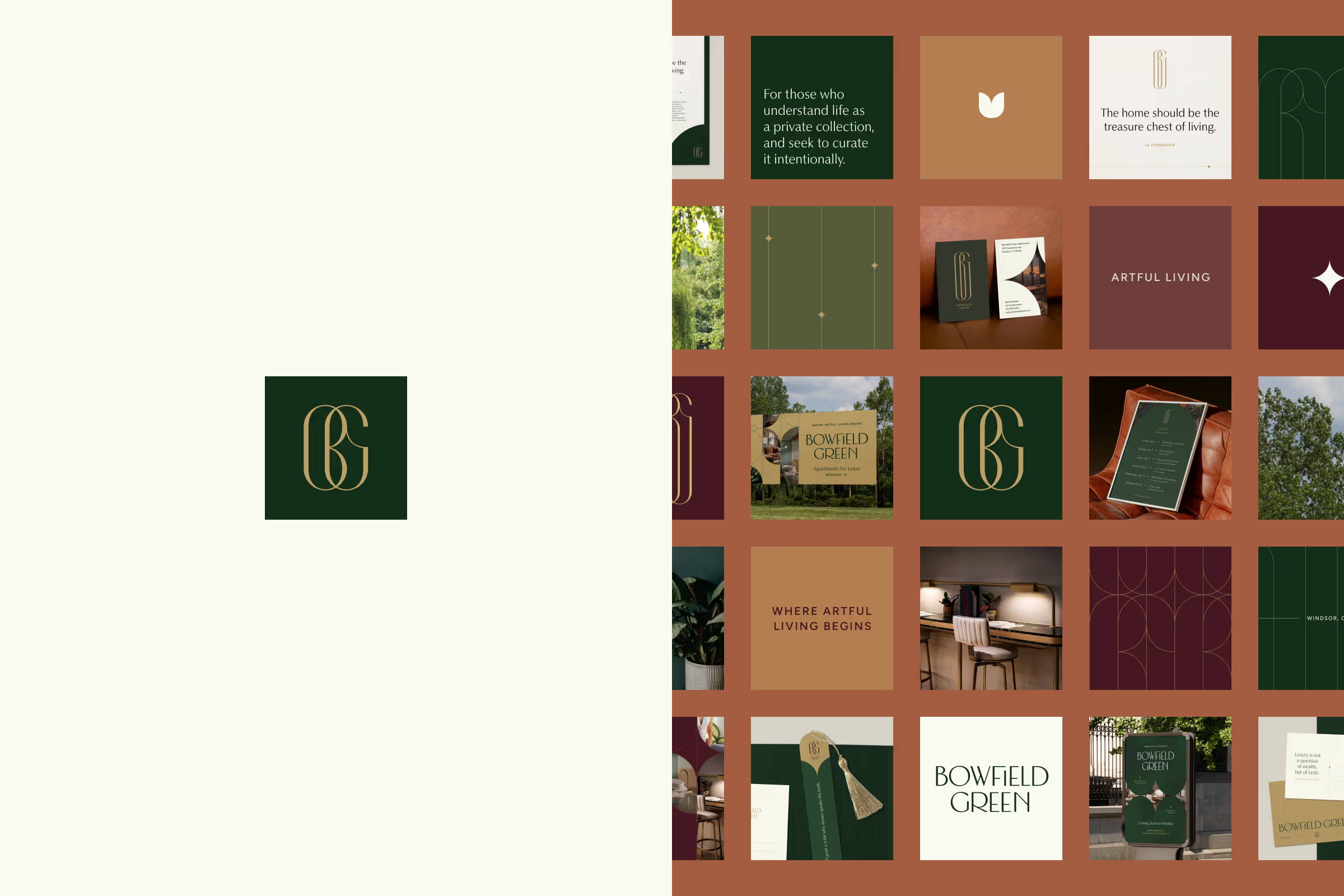
Visuals are a big part of your brand, and they extend beyond just your logo. Your brand is also your color palette, your fonts, your layout style, a pattern, an illustration style, a custom texture or photo effect, badges, icons, and more.
But looks only go so far. Your brand extends beyond visuals and into your messaging, the experiences you provide, and the way you make your audience feel on a day-to-day basis.
The real reason Nike sticks in your head (and how you can, too)
Going back to our Nike example: You might just think of the swoosh. But you also might think of other things.
You might think of the sound the swoosh makes when it’s animated, or the tagline, “Just Do It”.
You might think of the bright orange box their shoes come packaged in.
You might think of the high-contrast, high-quality black and white imagery often associated with their campaigns, or the condensed, thick, sans-serif all-caps font used across their marketing materials and website.
If you’re more design-savvy, you might even think of their editorial-like use of whitespace and minimal layout, which they have consistently embraced for decades.
All these individual pieces working together make Nike who they are today, and they wouldn’t be here without them. You don’t just become a superstar overnight. They worked from the ground up to build a system of beliefs and visual elements that clearly define who they are and what they stand for — and man, do people resonate with it.
This is why Nike is so memorable beyond their logomark — they know who they are, how to stand out, and stay consistent in everything they create.
Do you have a brand, or just a logo?
Either way, we’re happy to help. Contact us for an introductory call. We’ll provide a quick brand audit and let you know where you stand and how we can help you get to the next stage.