The Art of the Menu
To many, a menu serves one purpose: a means to order food—but it truly is so much more than that. It is an experience guide, leading you through culture, experimentation, and even acts as a piece of education. It is your first true look into what to expect during your time spent there.
All of this is taken into account when designing the menu. The way the information is organized dictates the flow and how it is read and perceived, which in return directly impacts the patron’s decision-making. There is true psychology behind these decisions and many chefs consider this when creating their menu.
Let’s break it down into three main categories: the technicalities, the structure & flow, and the design & personality.
The Technical Elements of Menu Design
There are a few things to be intentional about when creating a menu. The details that may go unnoticed by the guest quietly influence how the menu is read and ultimately acted upon.
Verbiage Matters: Menu Language Shapes Perception
The item descriptors do more than just explain what’s in a dish; they establish credibility and set expectations. Calling out locally sourced produce, noting certifications of quality, and using descriptors that indicate craft all play a role in creating trust with customers. Words like handmade or wood-fired add a perceived value and proof of quality, helping guests justify price points and feel more connected to what they’re ordering. Congruently, restraint is key. Overloading descriptors can often feel forced and performative. The overall goal is to inform in a way that feels confident and effortless.
Menu Pricing & Guest Psychology
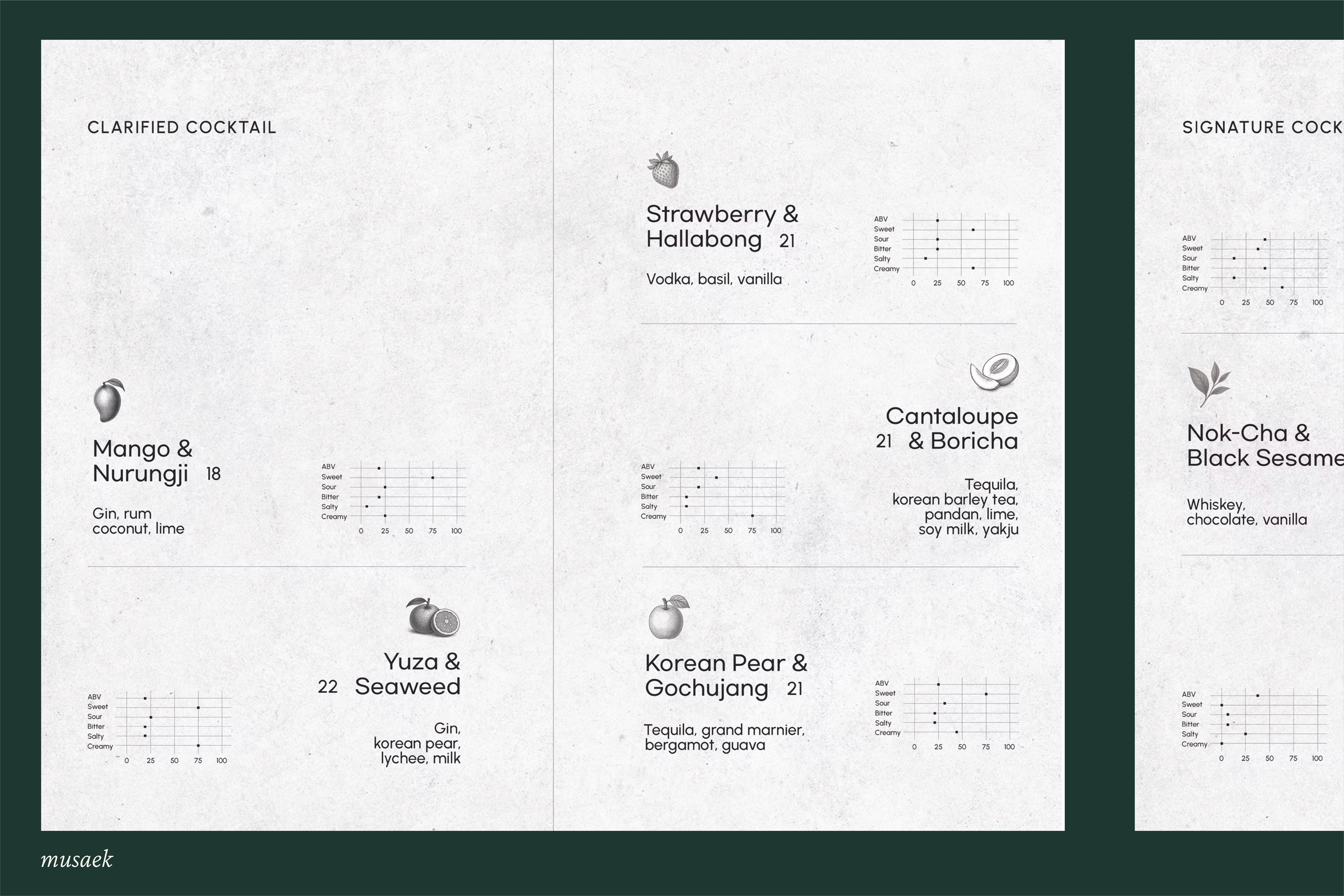
How prices appear on a menu can influence spending behavior as much as the number itself. Removing dollar signs subtly distances the guest from the idea of “spending”. Similarly, rounding prices to whole numbers feels cleaner and more considered. These small typographic decisions help keep the focus on the food, not the math.
Menu Layout, Structure & Flow
A well-structured menu doesn’t rush the guest; it leads them—clearly, confidently, and without confusion.
Negative space is not empty space.
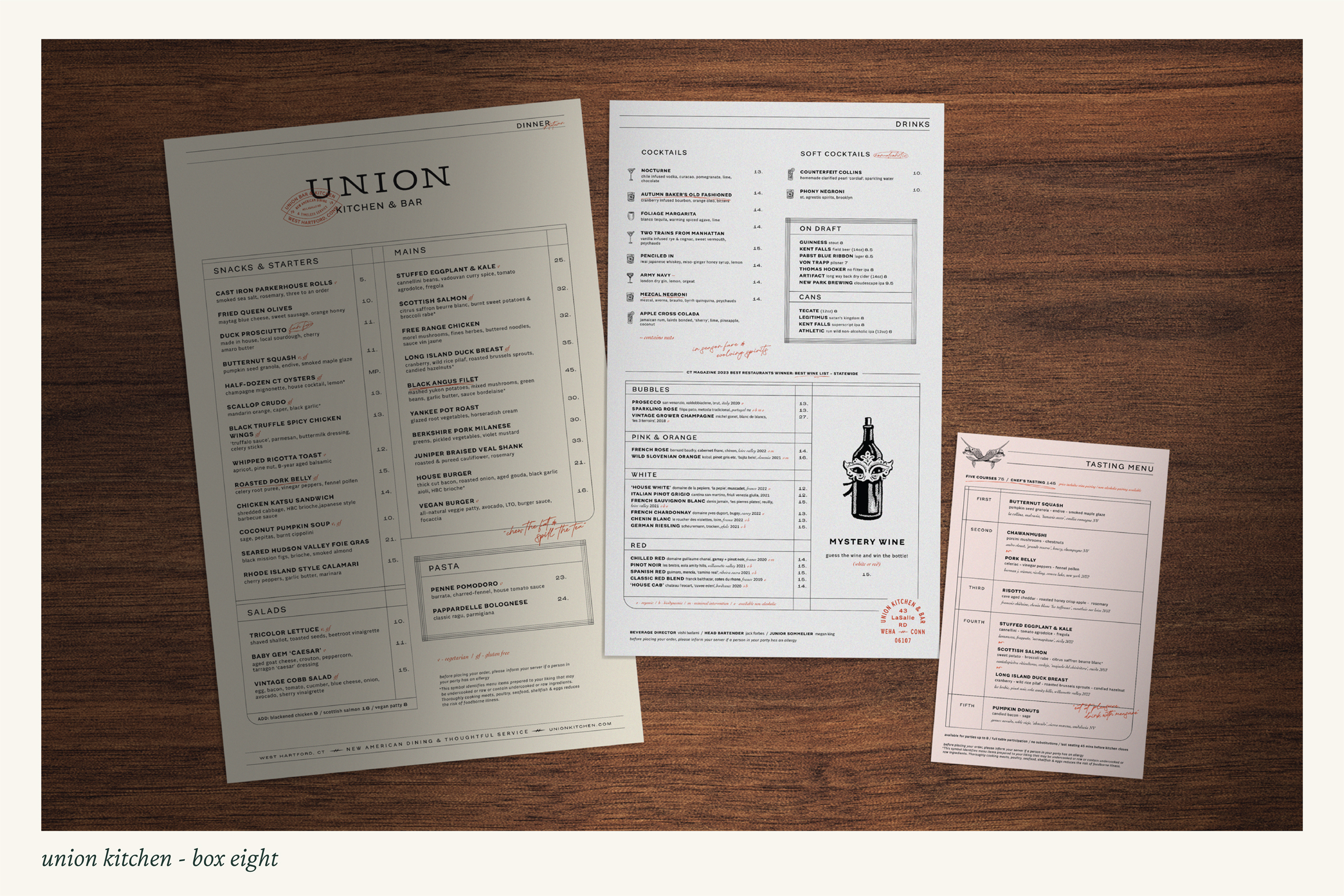
White space allows the menu to breathe. It separates sections, highlights important items, and prevents cognitive overload. When everything is competing for attention, nothing stands out. Negative space creates hierarchy and draws the eye—when done strategically, it can help guests make clearer choices.
Call-outs and visual groupings highlight importance.
Using rules, boxes, or subtle dividers can anchor key sections or call attention to specials, high-value items, or chef’s features. These groupings act as visual pauses, helping guests mentally organize information before moving on. When used sparingly, they add structure and highlight important information without feeling rigid or cluttered.
Order matters more than you think.
Menus are read predictably—top to bottom, left to right—and typically act as a step-by-step ordering guide for the entire meal. Small plates and appetizers tend to be the first sections listed, as that is what you order and eat first. Followed by salads and handhelds (if applicable), pastas next, and finished with entrées or large plates. This order helps with the overall flow, as it reads parallel to the normal dining order.
Menu Design as Brand Expression
This is where the menu stops being purely functional and becomes a brand artifact.
Menus should tell the same story as the space.
Typography, tone of voice, color, and design should all align with the restaurant’s identity. A bold, energetic concept may call for assertive design and playful language, while a refined, intimate space might rely on restraint and nuance. The menu is often the first physical touchpoint and in being so, its personality should feel instantly cohesive with both the interior space and energy from the staff.
A menu that feels considered signals care for the food, the experience, and most importantly, the guest.
Tactile choices matter.
Paper stock, texture, coatings, or even embossing can elevate the experience. A menu isn’t just read—it’s held. That physical interaction is an opportunity to reinforce quality, intention, and care. Kerning, line spacing, alignment, brand personality, and design all communicate intention. These are the details guests may not consciously identify, but they feel them. It signals trust. If a restaurant cares enough to ensure every detail, down to the little blurb of personality on the menu, is thought about and executed well, then you automatically trust the food will have the same level of craft and quality.
And finally: play, play, play!!!
Menus don’t have to be precious. They can surprise, amuse, and delight. Whether through unexpected copy, subtle humor, unconventional layouts, or experiential presentations, playfulness makes the experience memorable. The best menus feel alive—capable of evolving, responding, and expressing personality.

・・・・・
The menu isn’t just a list of dishes. It’s a story, a guide, and an invitation to immerse yourself in the world of that restaurant.